The US Has The Potential To Create A Carbon-Capture Network, But It Hinges On Funding By New Tax Credits

By: Marshall Kesterson

Researchers recently released an article that suggests the development of a pipeline network to enable the United States to capture, utilize, and store greater amounts of Carbon, reducing the amount of CO2 released into the environment. The Proceedings of the National Academy of Sciences paper proposes a pipeline network that can transfer carbon dioxide from ethanol refineries across the American Midwest.

The article, written by Ryan W. J. Edwards and Michael A. Celia of the Civil and Environmental Engineering department at Princeton University, focuses on the need for government financing of their proposed project. With the government financing 50% of the pipelines, they estimate that nearly 19 million tons of carbon dioxide per year could be captured and transported at a profit.

“Without government finance, we find that a network earning commercial rates of return would not be viable,” wrote Edwards and Celia.


Fig_1_whole_US_sources_w_trunks
Figure of colocated sources of CO2, existing CO2 pipelines, and potential saline storage capacities. Image by Ryan Edwards, Princeton University

The tax credit that was recently passed by Congress in the Bipartisan Budget Act of 2018 initially gave the authors the motivation to propose their pipeline network, and suggest that the new tax credits are one of the most significant policies incentivizing carbon capture, utilization, and storage (CCUS).

The UN’s Intergovernmental Panel on Climate Change (IPCC) presented computer-model-generated scenarios that suggested that reducing carbon emissions could reduce global temperatures from rising and maintain a goal of keeping the planet’s average temperature within 2 degrees Celsius above pre-industrial levels. This threshold was further established in the Paris Climate Agreement.

Edwards and Celia decided to focus on ethanol biorefineries, because the excess gas produced is 99 percent carbon dioxide, and ethanol refineries in the Midwest produce 43 million metric tons of carbon dioxide.

However, the construction of new pipelines has been a controversial topic for years. Fatality statistics from 2005 through 2009 state that oil pipelines are roughly 70 times as safe as oil trucks, which are more likely to be involved in car accidents, but pipeline failure poses disastrous environmental consequences. It was estimated that more than 3.1 million gallons of hazardous liquid per year were spilled from pipelines between 2008 and 2012.

Tony Iallonardo of the National Wildlife Federation told ProRepublica, “It’s inevitable that as pipelines age, as they are exposed to the elements, eventually they are going to spill. They’re ticking time bombs.”

Most notably, an ExxonMobil pipeline carrying Canadian oil sands through Mayflower, Arkansas, broke and spilled an estimated 210,000 gallons of Canadian crude oil onto the homes of 29 people. Reporters who covered the incident were threatened with arrest because Exxon wanted to release the daily updates covering the spill.



Due To Recent Flood Events, Coal Ash Has Escaped Into The North Carolina Landscape — What Environmental Impact Has It Had?

By: Marshall Kesterson

On Friday, floodwaters busted the Sutton Lake Dam, which is connected to Duke Energy’s L.V. Sutton Plant in Wilmington, North Carolina. Environmentalists are concerned that the coal ash dump located behind the dam has escaped into the Cape Fear River.

Duke Energy had to shut down its Sutton plant on Sunday. The company claims that the coal ash hasn’t contaminated the Cape Fear River.

17ddd4e8-be94-489a-a94e-cd3677616991-large16x9_AP18265007656201.jpg
Gray muck floats on the Cape Fear River near the L.V. Sutton Plant near Wiilmington N.C. Credit: Peter Harrison / Earthjustice via AP

The ash containment pit at the Sutton plant was built in 1974, and it held approximately 400,000 cubic yards of ash. The area received more than 30 inches of rain due to Hurricane Florence.

The N.C. Department of Environmental Quality and the Cape Fear River Watch have been skeptical of Duke Energy’s claim, and are currently working on collecting data for a third-party analysis.

“Keep in mind, Duke sent their samples to their in-house lab. Until you have a third-party analysis, any analysis should be taken with a grain of salt,” said Kemp Burdette of Cape Fear River Watch.

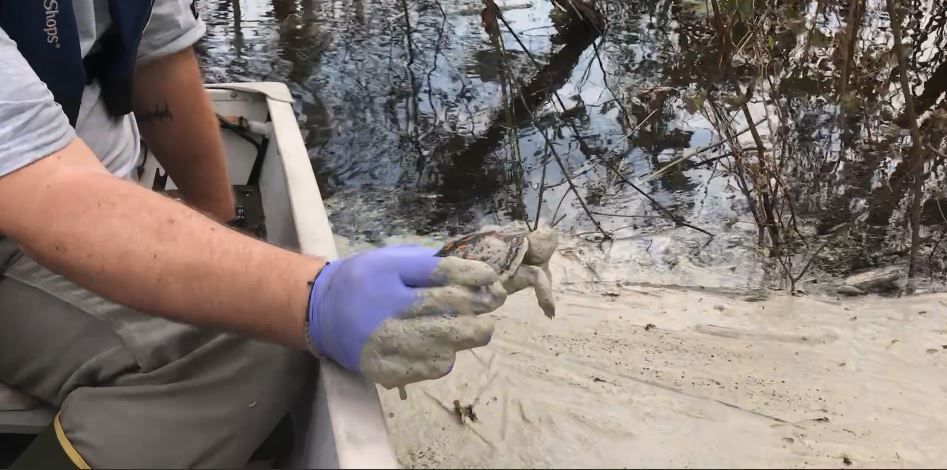
Earthjustice, an environmental advocacy group that had a boat on the river, took pictures of gray slicks in the water and they rinsed off a turtle they found caught in the muck.

Turtle.jpg
Turtle being removed from gray muck along the Cape Fear River near the L.V. Sutton Plant. Credit: Peter Harrison / Earthjustice via AP

Duke Energy recently reported that arsenic and metal concentrations in the Cape Fear River has been slightly elevated following the Sutton flooding, but noted that there was no indication of coal ash entering the river.

Arsenic is naturally present at high levels in groundwater, and it is highly toxic when in its inorganic form. Duke Energy’s study on the Cape Fear River gave a test result of 1.11 thousandths of a milligram per liter of water. Although this doesn’t come close to reaching the concentration limit set by the state, 50 thousandths of a milligram, it is still higher than normal.

The levels of metals found in the river were more manageable, at 2.2 milligrams per liter on Friday when the dam was breached. Other contaminants found in the river included selenium, chromium, oil and grease; however, Duke noted that the contamination of these chemicals was well below permitted regulatory limits.

North Carolina’s Animal Waste Problem Has Been Intensified By Recent Flood Events

By: Marshall Kesterson

North Carolina is currently handling an abundance of agriculture-related issues regarding the death of thousands of farm animals and fecal contamination of flood waters due to Hurricane Florence.

Hurricane Florence made landfall on Friday, September 14, at 7:15 a.m. on Wrightsville Beach, N.C. It struck land as a Category 1 hurricane but was quickly downgraded to a tropical storm Friday evening. The National Hurricane Center warned of possible “catastrophic freshwater flooding” from Florence.

Almost 9 million hogs, 819 million chickens and 43 million turkeys are raised in North Carolina each year for the pork a poultry industry. Livestock, Dairy and Poultry comprise nearly 68 percent of cash receipts in North Carolina.

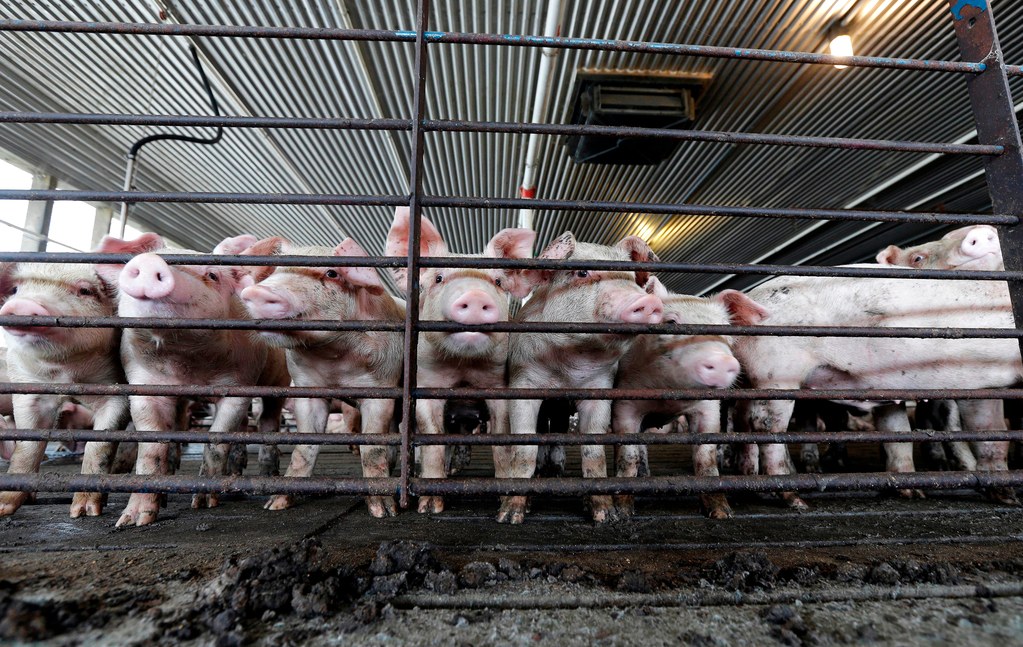
Hogs
Hogs at an industrial animal-feeding operation in North Carolina. Credit: Gerry Broome / AP

The resulting flooding from the tropical storm resulted in the death of nearly 1.7 million chickens and 5,500 hogs. The N.C. Department of Agriculture issued its mortality totals on September 18 while flooding continued.

Waste from hog and poultry facilities are stored in “lagoons” created by animal defecation being moved along a slatted floor system until it is emptied into an outdoor cesspool.

The North Carolina Department of Environmental Quality noted that an earthen dam at a hog lagoon in Duplin County was breached by floodwaters. In total, the department has determined that 132 of the 4,000 hog-waste lagoons were compromised.

Chickens
Flooded chicken farm buildings near Trenton, N.C., Sunday, Sept. 16, 2018. Credit: Steve Helber / AP Photo

Elsie Herring, a resident that has a home in Wallace, North Carolina, said, “People don’t understand how nasty this hog industry is. We’re forced to live with animal waste and nobody seems to care, not even now.”

Herring has filed court documents in the past regarding an “odorous fecal and urinous mist” coming from her neighbor’s hog operation. Nearby contamination was an issue for her long before Hurricane Florence.

Although the conditions haven’t been this bad before, several breaches in hog-waste lagoons have occurred in the past. North Carolina’s Oceanview Farm had an eight-acre hog waste lagoon give way in 1995. It resulted in the release of 25 million gallons of pig feces into the New River’s tributaries.

Other breaches have occurred in the more than two decades since the Oceanview Farm breach, but no discernable change has been made to fix the issue.

The Trump Administration’s Latest Methane Rule Rollback Is Bad For Life On Earth

By: Marshall Kesterson

The Trump administration made a move on Tuesday to roll back on an Obama-era rule that was enacted to prevent the leaking, venting, and flaring of methane gas during oil and gas operations on public lands.

Not only did the Obama-era rule aim to prevent the popular greenhouse gas from being thrown into the atmosphere but it also would have reduced waste to ensure a fair return to the American taxpayers for the use of the resource.

Methane Colorado
Natural gas is burned off near pumps in Watford City N.D. Credit: AP


The Trump administration’s Department of Interior stated that the Obama-era rules already overlapped with existing tribal land regulations.

However, the Bureau of Land Management, a department overseen by the Department of the Interior, estimated that the regulations would have eliminated 175,000 tons of methane emissions and saved state and federal governments almost $14 million in additional annual royalties.

“The flawed 2016 rule was a radical assertion of legal authority that stood in stark contrast to the longstanding understanding of Interior’s own lawyers,” said Deputy Secretary David Bernhardt.

Many tribal lands located next to oil and gas operations would be placed at a disproportionate health risk if air pollution isn’t reduced. Navajo Nation is 2 times more likely to be located within 1/2 mile of an oil and gas facility, and the Uintah-Ouray is 42 times more likely.

jj
Radius Data: U.S. Census. 2010. Oil and gas facility data: Oil&Gas ThreatMap Poverty Data: American Community Survey. 2016. Credit: Tribal Communities at Risk

California and New Mexico have already sued the Trump administration over the rollback

Methane is a greenhouse gas that is about 25 times more potent than carbon dioxide. It has been estimated to have risen in concentration by 150 percent since 1750 due to human activities. A majority of methane comes from the decomposition of rice paddies, swamps and cow intestines.

Methane is a hydrocarbon that has the potential to react with Flouride and Chloride in the atmosphere in a radical chain mechanism that can result in the creation of holes in the earth’s ozone layer. This damage results in an increase of skin cancers and ecological damage.

The Government Has Faced A Large Amount Of Scrutiny In The Days Preceding The Arrival Of Hurricane Florence

By: Marshall Kesterson

Hurricane Florence, currently labeled as a category 2 hurricane, is expected to move near or along the East coast sometime Friday. 300 miles of coastline received a hurricane warning at the beginning of the week, placing nearly 1 million people in need of evacuation.

Hurricane
Photo of Hurricane Florence Credit: NPR News

North Carolina Gov. Ray Cooper released a statement to the State’s residents on Wednesday:

Brock Long, the administrator of the Federal Emergency Management Agency, also issued a warning to those on the East coast saying that it is possible their power could be out for weeks. Thursday a report was issued that approximately 12,000 North Carolina residents have lost power in the hours before the hurricane is expected to make landfall.

Despite warnings, some residents of North Carolina, South Carolina, and Virginia still aren’t evacuating. In the case of South Carolina’s MacDougall Correctional Institution, the state is refusing to move inmates, regardless of the evacuation orders.

Many critics are worried that the government and FEMA might not be prepared to deal with the hurricane. After Hurricane Maria hit Puerto Rico, resulting in a death count of nearly 3,000 people, FEMA expressed that it vastly underestimated how much water and food was needed to prepare for the storm.

President Trump denied claims that the government failed in handling Puerto Rico, saying that his administration was “incredibly successful” and that he thinks the government’s handling of Hurricane Maria was “one of the best jobs [that has] ever been done” in regards to hurricane relief.

Puerto Rico’s governor disagreed with the President’s assessment and released his own statement:

Not long after being asked about the government’s handling of Puerto Rico, the President took to Twitter to deny the official death count and blame Democrats for making him “look as bad as possible”:

FEMA released a detailed report assessing the agency’s response to the 2017 storm season. In this report, the agency showed that it failed to prepare for Hurricane Maria because the government hadn’t anticipated dealing with two hurricanes.

Recently, a budgeting document surfaced that showed that the Trump administration cut FEMA’s budget by $10 million and used the funds to support ICE. This has further raised questions from critics about if FEMA has the funding to properly prepare for Hurricane Florence.

Follow the link below for live updates on Hurricane Florence:

https://www.wsj.com/livecoverage/hurricane-florence-live-news-coverage

In Spite Of Local Government Pledges, We Are Still Not Meeting Previous Emissions Goals

By: Marshall Kesterson

Recently, local governments around the United States have made serious legislative strides in an attempt to reduce carbon emissions and rely less heavily on non-renewable energy sources. In the past few weeks, California and Orlando, Florida, have enacted legislation to reduce reliance on fossil fuels for energy.

California approved a measure to require energy sources that power the state to come from renewable sources by 2045. The Assembly of the State of California voted 43-32 in favor of legislation to eliminate reliance on fossil fuels for energy.

California has been a prominent leader in the battle against climate change. A little while back, the Los Angeles Department of Water and Power suggested attaching a $3 billion pipeline and a pump station powered by solar and wind energy to the Hoover Dam in an effort to curb carbon emissions.

orlando.jpg
An engineer from the Orlando Utilities Commission examining data at a solar test site. Credit: Edward Linsmier for The New York Times

Orlando, Florida, has set a goal to have all energy sources be carbon-free by 2050. The city, which has already placed solar panels on nearly 18,000 of its 25,000 streetlights, is hoping to equip 8 percent of its city-owned utility with solar panels by 2020.

These legislative changes by city and state governments are the latest moves in a long-term response to President Donald Trump’s June 2017 announcement that the United States would be withdrawing from The Paris Agreement.

This announcement prompted a number of U.S. mayors to sign their own pact that vowed their cities would continue to follow the rules the Paris Agreement put in place. Local governments were leading the way to a more environmentally-friendly future even before President Trump declared the withdrawal.

During his announcement, President Trump defended his decision to leave the Paris Agreement by saying that he was “elected to represent the citizens of Pittsburgh, not Paris.”

Despite the enormous number of pledges by local governments to commit to the Paris agreement, many critics worry that it still isn’t enough to put us on the right track. In one study, greenhouse gas mitigation pledges in nearly 6,000 cities, states, and regions around the globe found that only about 1.5 billion to 2.2 billion tons of greenhouse gas would be reduced, barely impacting the roughly 30 billion tons of total CO2 emissions released annually.

In the United States, however, the impact of mitigation pledges was estimated to reduce emissions half way to what would be needed to meet the US target emissions that were listed in the Paris Agreement. Although this is remarkable, it still doesn’t stop the United States from crossing the threshold for dangerous warming.

Only time will tell if the efforts made by local governments to decelerate climate change worked as intended.

Staying Updated in a Changing Environment

By: Marshall Kesterson

The natural world is evolving at a rate that is hard to keep up with. For most people, it is hard to stay updated on the number of natural disasters, cases of animal exploitation, and industrial pollution that happens on a daily basis. This is why we have a responsibility to be aware of current environment-related events, and why we should consciously search for topics to cover. As the author of this blog, it is my job to inform readers about my possible future blog topics.

One of the first policy-related topics that drew my attention was a blog post by Mother Jones’ environment blog in which they discussed how the government will soon have to identify the parts of the ocean that will be classified as “critical habitats” for endangered whale populations. This post could be further developed with a follow-up post made when the government finally labels the critical habitats. Many environmentalists are bound to discuss the practicality of the areas the government selects, and this would create great subject matter to base a blog post on.

Recently, OnEarth made a blog post about American taxpayers being asked to fund a 60-mile seawall along Texas’ Gulf Coast that would protect industrial facilities along the coast. Creating a conversation about the benefits and drawbacks of the 60-mile wall would be a great way to help readers form opinions about this topic.

The New York Times Green blog wrote about the 2013 annual meeting of the Advanced Research Projects Agency-Energy (ARPA-E) in which new ideas for energy production were listed and discussed. This meeting happens yearly, and I could write a post talking about the most recent ARPA-E meeting. Expanding on this, a discussion needs to be made about how developed, or undeveloped, some of the listed energy sources are. This could introduce arguments about how workable the energy sources are.

Both Orlando, Florida and the state of California have made recent strides to commit to the goals put in place by the Paris Climate Accord despite President Trump’s recent move to withdraw the United States from the agreement. A conversation on the policies that will be implemented on the city and state levels of government can be put into a blog post.

The Environmental Blog made a post detailing reasons businesses should go green. This sparked an idea to make a blog post that discusses the benefits and drawbacks companies have faced when implementing new eco-friendly policies.

All the blogs in my blogroll focus on issues that scientists and environmentalists have deemed relevant. This will allow my blog to cover both environmental disasters happening in the United States and policies being enacted by state and federal governments to protect the environment.

The “Red Tide” Isn’t Leaving Florida Coasts Any Time Soon

By: Marshall Kesterson

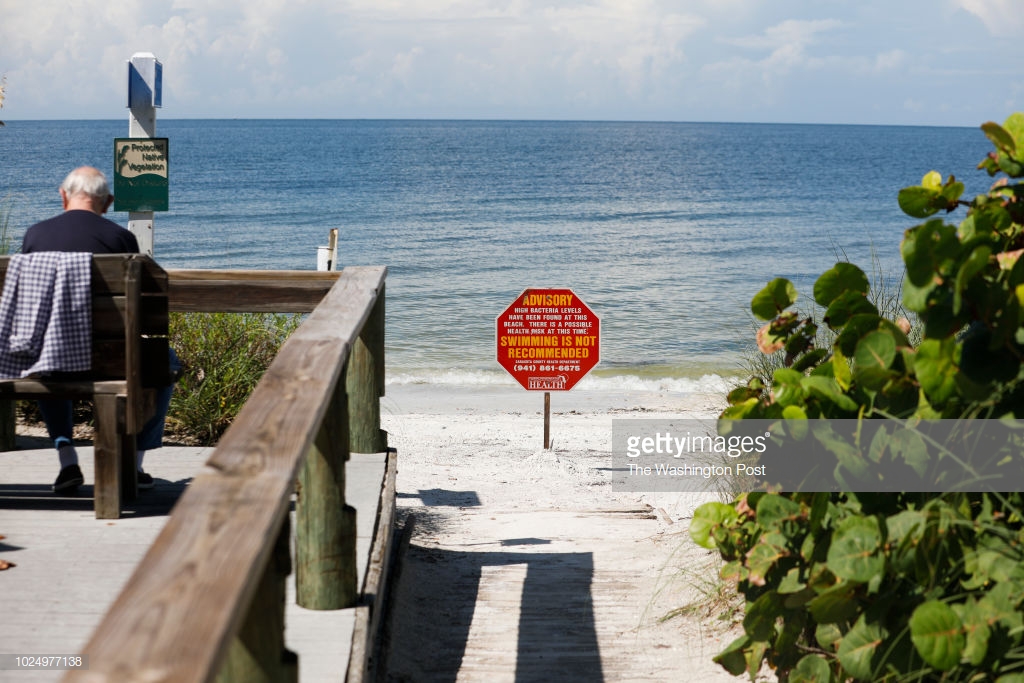
SARASOTA, UNITED STATES - August 26: A sign warning of a no sw
A Sign Warning Civilians Not to Swim Credit: The Washington Post

Florida’s Southwest coast has been dealing with a “red tide” caused by a deadly algae bloom of the dinoflagellate Karenia brevisK. brevis can produce brevetoxins, which are known for causing high mortalities in marine fish and humans via neurotoxic shellfish poisoning. The current algal bloom has been going on since October 2017.

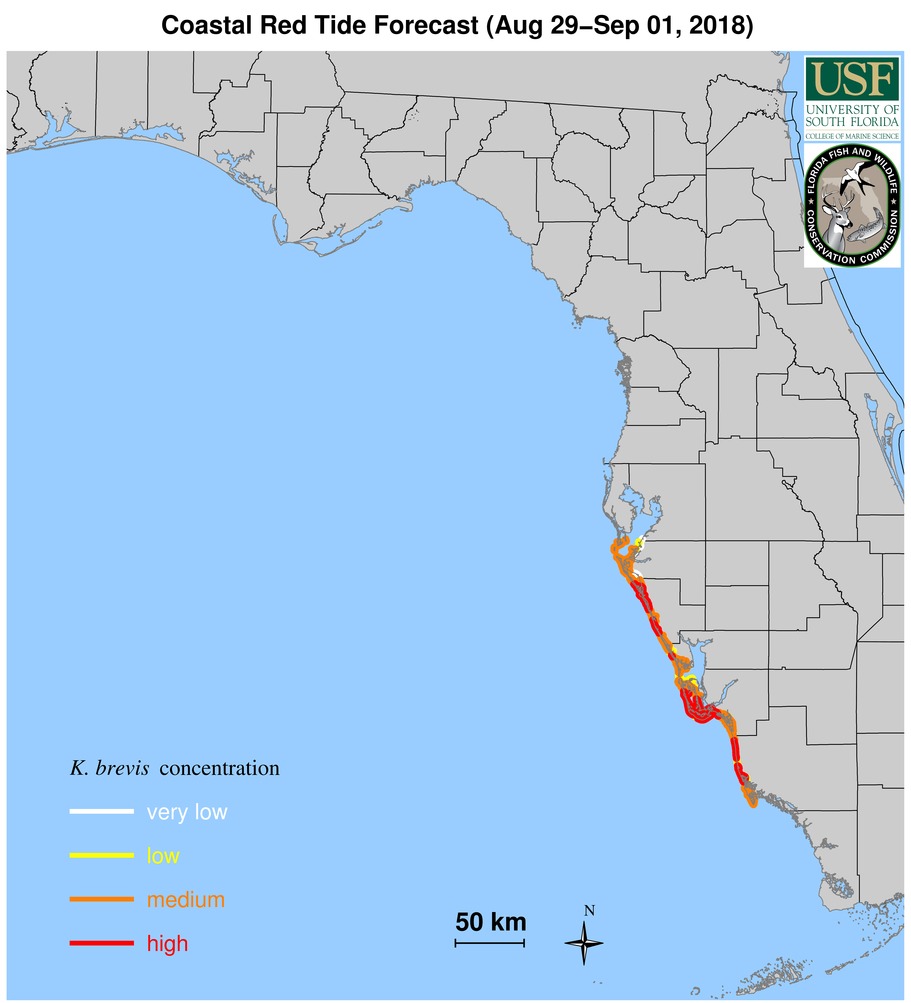
The USF-FWC Collaboration for the Prediction of Red Tides has predicted the movement of surface waters to the Northeast over the coming days. However, this water movement will have a negligible effect on the K. brevis bloom.

Algae forcast
Projected Population Concentration of K. brevis Credit: Ocean Circulation Group at the University of South Florida College of Marine Sciences

While monitoring the abundance of K. brevis the cyanobacterium, Trichodesmium was identified about 10 miles west of the Southwest coast. Scientists fear that the increased concentration of Trichodesmium could merge with the red tide and serve as a food source, increasing the duration of the algal bloom.

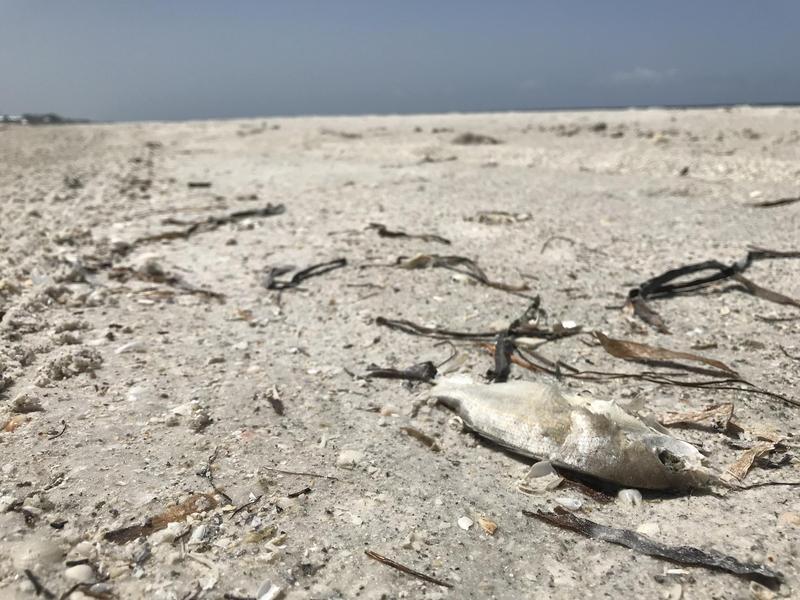
The red tide has had a noticeable influence on Florida’s marine vertebrate populations. The red tide has resulted in the death of at least 29 manatees, and it has stranded 318 sea turtles. The tide has also caused numerous fish kills, leaving many Florida beaches covered in rotting fish.

fish kill.jpg
Dead fish on Anna Maria Island in Manatee County, Florida Credit: Jessica Meszaros/ WUSF Public Media

West coast businesses have also been impacted by the red tide. Some estimates have shown that nearly $90 million has been lost and 300 workers have been laid off because of the algal bloom. The drop in tourism has been attributed to the loss in business.

Scientists are still unsure if the recent algae bloom was caused by climate change. Many have noted that the water in the Gulf of Mexico increasing in temperature and carbon dioxide content has made the bloom worse.

Monitoring for the presence and concentrations of K. brevis is done by the Florida Fish and Wildlife Conservation Commission.

Trump Administration is Replacing Obama-era Clean Air Rules, Despite the Health Concerns Cited in the Latest EPA Report

By: Marshall Kesterson

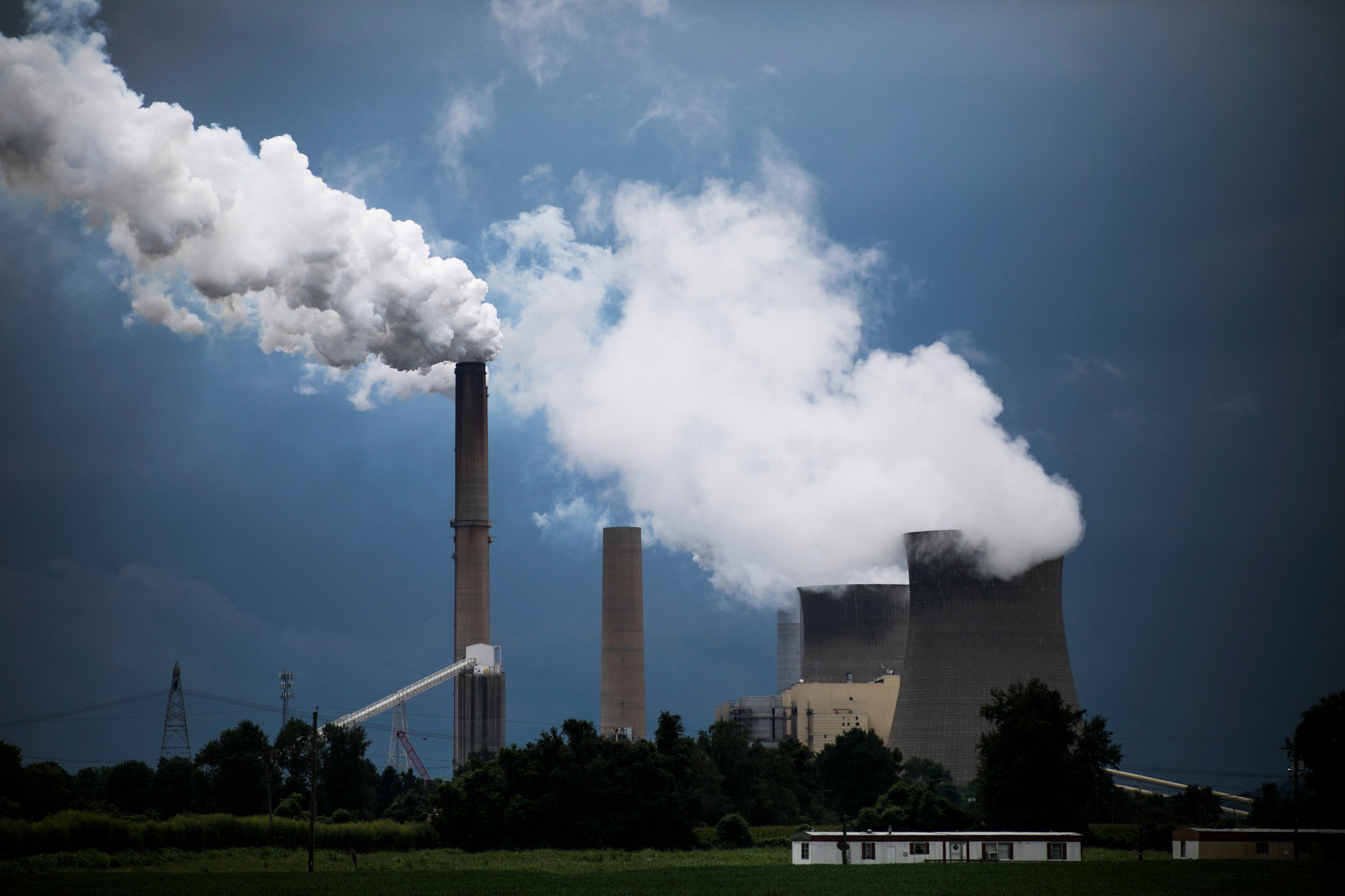
COAL
A power plant located in Cheshire, Ohio. Credit Maddie McGarvey for The New York Times

The Trump administration made a move on Tuesday to formally replace the Clean Power Plan with a proposal called the Affordable Clean Energy (ACE) rule.

Following the regulation change, President Trump’s Environmental Protection Agency released its own analysis of the new rules. The analysis revealed that the regulation change could lead to as many as 1,400 premature deaths annually by 2030 and create up to 15,000 new cases of upper respiratory problems.

Many news organizations were quick to point the EPA analysis out:

The Affordable Clean Energy rule allows individual states to create their own plans for regulating greenhouse gas emissions from coal-fired power plants, contrasting from the federal government regulation of state’s emissions that existed under the Clean Power Plan.

The Clean Power Plan, a set of pollution regulations announced by former President Obama in August 2015, aimed to reduce carbon pollution throughout the United States by moving the power sector away from non-renewable energy sources. The plan was projected to lower carbon emissions from the nation’s power plants by 32 percent by the year 2030.

Currently, energy production is the second largest source of greenhouse gas emissions, according to a report released by the EPA in 2016. The report listed coal combustion to be the most carbon-intensive source of electricity production in the U.S., comprising about 67 percent of total carbon dioxide energy emissions.

Following the announcement of the Affordable Clean Energy rules, President Trump held a ‘MAGA’ rally in Charleston, West Virginia.

At the rally, President Trump said, “We are putting our great coal miners back to work.”

The Charleston Gazette-Mail released an article on Monday criticizing President Trump’s latest policy decisions. In it, they noted that many experts believe that the decline in coal industry jobs is going to happen regardless of Trump’s regulatory changes.

The latest employment numbers in the coal mining industry have shown a slight increase of approximately 4,200 jobs from July 2016 to July 2018. It is still unclear if the new rules will stimulate employment growth further.

The introduction of the Affordable Clean Energy rule follows many other attempts made by the Trump administration to reduce regulations on pollution. Previously in the year, the EPA was placed under the public eye for its rollback on an Obama-era rule designed to cut pollution from vehicle tailpipes.